



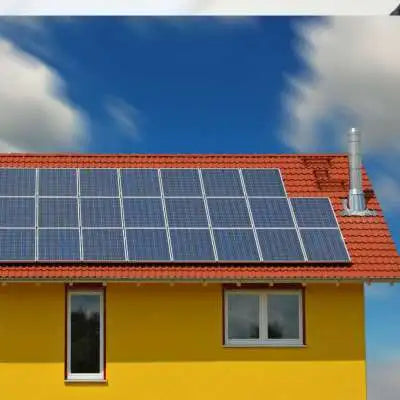

In 2021, 1,203 more megawatts of new photovoltaic power were installed in self-consumption solar panels in Spain, an increase of 102%, which is also accompanied by an 89% decrease in the price of panel installation and a considerable increase in energy prices.
It's the solar panel boom, and they are becoming increasingly profitable.
But, as with all "booms" that lead us to do things massively and quickly, we need to consider more details than one might assume.
One of the key details, often overlooked by many, is the connectivity factor, which we want to address here today.
Does my photovoltaic installation need good connectivity?
Absolutely. Especially if you want to monitor your photovoltaic installation correctly and conveniently. This is done through one of the most important components of your installation, "the photovoltaic inverter."
The inverter is a component of photovoltaic solar systems that is responsible for converting direct current (produced by the panels) into alternating current so that we can generate and consume our own electricity.
These types of components are key to allowing installers and owners to supervise the correct operation of their installation in case of any anomaly, and they facilitate and optimize the overall performance of the installation to obtain maximum energy utilization from each of the photovoltaic solar panels.
The inverter is usually installed in garages or storage rooms where there is no internet connectivity. The photovoltaic inverter needs this connectivity to allow viewing the operation, performance, production, and consumption of the photovoltaic installation from a mobile phone, tablet, or computer.
Mostly, these inverter-to-router connections are attempted wirelessly, although often they cannot connect due to the weak Wi-Fi signal reaching the inverter.
In other cases, a connection is achieved but it is unstable and constantly disconnects, leading to a very poor user experience and preventing proper monitoring of the solar installation.
Thus, we may find that an installation costing several thousand euros does not provide an optimal experience simply because the connectivity factor was not taken into account in the equation.
How to reliably connect the photovoltaic inverter?

Although there are specific Wi-Fi adapters for photovoltaic inverters that work very well, they will be of little use if our Wi-Fi signal is poor where the inverter is installed.
For this reason, we recommend using a wired connection whenever possible.
In the following case, we show a connectivity diagram using a plastic optical fiber kit to guarantee good, interference-free connectivity while simplifying the installation as much as possible.
Using the Single FE KIT (100 Mb), the inverter can be connected to the router with plastic optical fiber using the existing electrical conduits of the home, providing the installation with a 100% reliable connection that will not be subject to interference or fluctuations in range.
Request a free technical consultation with our experts to understand your needs and adapt the project to your particular case.


