



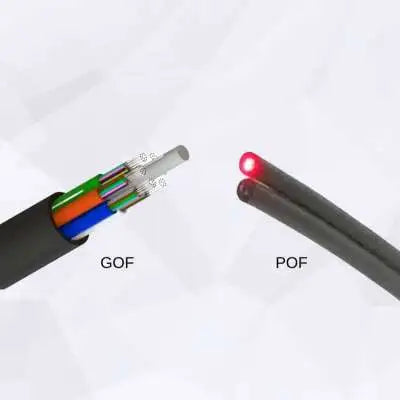

Glass optical fiber (GOF) and plastic optical fiber (POF) are two types of optical fiber used in telecommunications networks for transmitting light signals through very fine strands. Both have high data transmission capacity and are very fast, but there are some important differences between them.
What are the differences between glass optical fiber and plastic optical fiber?
One of the main differences between glass optical fiber and plastic optical fiber is the composition of the strands. Glass optical fiber is made of pure glass, while plastic optical fiber is made of plastic polymers. This difference in composition affects some of the properties of both types of optical fiber.
An important difference is strength. Plastic optical fiber is more resistant than glass optical fiber, as glass is a more sensitive and less resistant material than plastic. This makes plastic optical fiber more suitable for use in corrugated conduits and home installations, where glass optical fiber might be more prone to breaking.
-min.jpg)
Advantages of glass optical fiber
Withstands high temperatures
High-speed data transmission over long distances
Extremely thin fibers
Disadvantages of glass optical fiber
Requires extensive specialized knowledge and expensive installation equipment
Difficult to handle due to delicate installation, as the fiber strands are extremely thin. Glass optical fibers are fragile.
Plastic Fiber (POF)
The great advantage of plastic optical fiber over Ethernet UTP copper is that it is completely immune to electromagnetic interference generated by power and current cables.
This means that light is not affected by electromagnetic interference and is also less sensitive to "power" loss over distance. We can run it among other electrical cables without worrying about interference.
Plastic optical fiber has some advantages over glass optical fiber. Firstly, it is lighter and easier to handle, which makes it more suitable for installations requiring greater flexibility. Furthermore, it is simpler to install as it does not require a fusion splicer for connections, which also makes it more economical than glass optical fiber.

Advantages of plastic optical fiber:
The material used to make it is inexpensive and easy to handle.
Anyone can install it without being an expert.
You don't need expensive tools or equipment to install it.
It is very flexible and resistant to bending.
Disadvantages of plastic optical fiber:
The signal attenuates and disperses easily, so it only works over short distances (50 meters).
It can only transmit up to 1GB of data.
Conclusion
In general, the choice between glass optical fiber and plastic optical fiber will depend on the specific needs and requirements of each network and application. They consist of different materials and have their own advantages and are suitable for different applications, but if you are looking to have a point-to-point fiber installation at one or more additional points in your home, plastic fiber is the most attractive option.


